
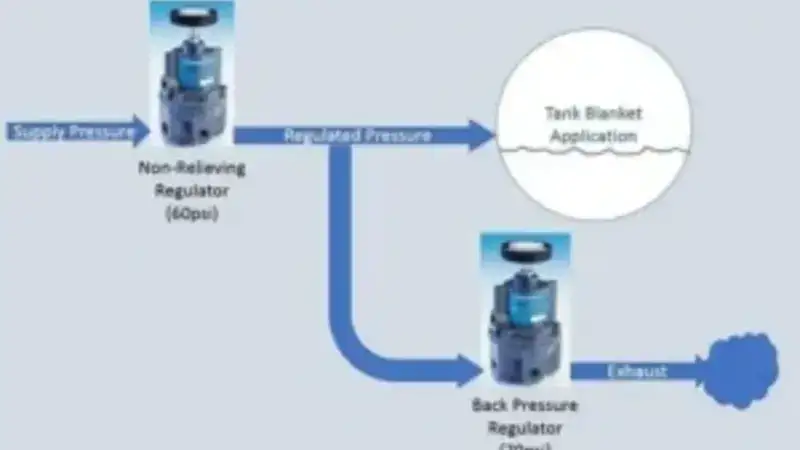
A Proportional vs. Standard pressure regulator maintains a constant pressure, which means it works like turning on or off. Whereas the proportional pressure regulator has the ability to change the pressure in different settings. It does this slowly in small steps, so the overall flow remains smooth. Stay with us as we are going to discuss the engineering behind both regulators!
A simple way to see the difference
We gave easy examples to help you understand the difference better:
- Standard regulator: you turn a knob. The pressure jumps to the set level and stays there until you turn it off.
- Proportional regulator: you move a slider and change it as per your needs. The pressure changes smoothly without any jerks.
Main parts and how they work
Both regulators use similar parts, such as a valve, a sensor, and a spring or actuator. Engineers only change how those parts move and how the controller checks them.
- Valve: opens to let air or fluid through.
- Sensor: analyze the pressure.
- Controller or actuator: tells the valve how far to open.
In a standard regulator, the controller makes the valve move to correct big changes. In a proportional device, the controller sends steady commands so the valve moves smoothly and in small steps.
How electronics change the game
Designers add electronics to their regulators to make them smarter. An electronic proportional pressure regulator uses tiny circuits and software to read the sensor and move the valve with fine control. An electronic pressure regulator also uses similar parts but may aim for simpler, fixed settings.
Electronics let the regulator react faster and keep pressure closer to what the machine needs. They also allow remote control and automatic adjustments. Business
Why smooth control matters
Some machines need fast, steady pressure changes. For example, robots or precision tools must move gently and exactly. An electro-pneumatic regulator pairs electronic control with air power. The result: smooth moves and less waste.
A standard regulator works well when you only need one stable pressure for a job. It costs less and works simply.
How engineers choose between them
Engineers ask a few clear questions:
- Does the machine need very fine pressure changes? If yes, choose an electronic proportional regulator.
- Does the system only need one steady pressure? If yes, a standard regulator will do.
- How fast should the regulator react? Proportional and electronic types react faster.
- What is the budget? Standard units usually cost less.
They also test the regulator in the real system to see how it behaves under load.
Simple examples to remember
- Filling balloons: A standard regulator fills them to the same firmness every time.
- Painting with a spray gun: a proportional regulator lets the painter set how much paint flows, making smooth strokes.
Tips for beginners
- Try to keep filters clean because dust makes valves stick.
- Match the regulator size to your air or fluid line. Too small limits the flow.
- For precise tasks, pick an electronic proportional pressure regulator. For simple tasks, pick a standard one.
Short summary
Proportional vs. Standard regulators hold pressure steady and work simply. Proportional regulators give smooth, small changes and suit precise machines. Adding electronics makes control smarter and faster. Engineers pick the right one by thinking about precision, speed, and cost.