
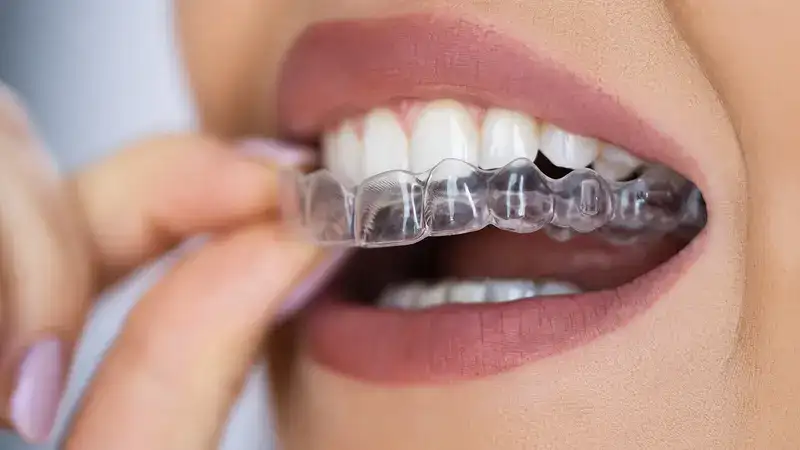
There are many instances where even the most confident people feel low in their lives due to compromised smiles. A maximum of these compromised smiles is due to Crooked Teeth to Clear Teeth Aligners. Crooked teeth make people get conscious because of them. These situations are more common than can be imagined. Crooked teeth do not necessarily involve the whole dentition. Sometimes, it’s just one tooth slightly rotated or turned. In some severe cases, there are more teeth involved and may need extensive treatment.
Crooked teeth need orthodontic treatment like braces or clear teeth aligners for correction. Attention must be paid to maintain the oral health, the patient’s aesthetic and oral muscle tone.
Though for some, teeth aligners or clear aligners are a cosmetic worry. But for many, clear aligners are a way to live a comfortable life with no hindrances due to ongoing treatment. Clear aligners have become one of the easiest, most comfortable ways to fix orthodontic issues. They are a series of thin, transparent trays that gradually move your crooked teeth into place without using wires, brackets, or any metal.
Why Teeth Become Crooked
Crooked Teeth to Clear Teeth Aligners can occur due to many reasons, but there are some benchmark causes that are discussed here:
- Genetics or Heredity – If your parents or grandparents had misaligned teeth, it’s possible that you too face this issue.
- Childhood habits –Long-lasting habits of childhood, like thumb sucking, tongue thrusting, prolonged bottle feeding, or mouth breathing, can affect the alignment of the teeth and cause misalignment.
- Loss of baby teeth too early or too late – If the tooth loss in children at an early stage is not treated with space maintainers, it is very likely that this can cause permanent teeth to shift into odd positions and cause major misalignment.
- Jaw size changes – Smaller jaws may not have enough room for all teeth to fit straight. Speaking about jaw size, genes can also become a potent factor in determining whether someone has a smaller or a bigger jaw.
- Injuries – Trauma or injury, or a direct blow to the mouth, can push teeth out of place.
But do not worry, whatever the cause may be, modern orthodontics, including clear aligners, offers faster, easier, noticeable, and guaranteed solutions.
The Clear Aligner Process – Step by Step
Straightening teeth with aligners is not just about wearing trays; it’s a planned process. Here’s how it usually works:
-
First Consultation
You start with a visit to a dentist or orthodontist. They check:
- How your teeth are positioned
- The health of your gums and bite
- If clear aligners will work for your case
If your case has mild to moderate gaps, slight crowding, and minor bite issues, then aligners are often suitable. For very complex shifts, braces may still be the better choice.
-
Digital Scan
Gone are the days of biting into liquid, nauseating moulds. Now, most clinics use a 3D scanner. It captures a precise image of your teeth from every angle.
From this scan, your dentist can:
- Plan every tiny movement your teeth will make
- Show you a digital preview of your future smile
- Give you an estimated treatment timeline
-
Custom Aligners Are Made
Your scan goes to a dental lab. This is where brands like Illusion Aligners use advanced planning and precision technology to create trays that fit perfectly and stay secure.
Each aligner in the set is slightly different. You need to change the aligner set every 7-14 days.
-
Wearing Your Aligners
The golden rule of wearing aligners is 20–22 hours a day.
You need to take them out only while
- Having meals or having beverages other than water
- Brushing and flossing
When you switch to a new set, you’ll notice a snug and tight fit; that’s how you know it’s intact, correct, and nicely working. Some people may see small changes within weeks.
-
Review Visits
These aren’t long appointments, but quick checks to assess expected progress.
-
Finishing Touches
Sometimes, you might need a short “refinement stage.” This means a few extra sets to perfect the final alignment.
-
Retainer Stage
Retainers are just like aligners, but their job is to keep shifted teeth in their new place. Your dentist will guide you on how long and how often to wear it.
Life After Aligners
The benefits of aligners are many, unlike braces and go beyond looks and cosmetic concerns. Some of the benefits are mentioned below:
- Maintaining oral hygiene becomes very easy and accessible
- The teeth align really quickly without any frequent readjustments
- Zero gum injuries, unlike braces
- No speech problems and no emergency visits to the dentist
- High confidence all throughout the treatment because of its clear look.
Why This Process Works
Clear aligners or teeth aligners work because they combine advanced technology with precise planning. Each tooth movement is calculated, evaluated, and predicted. Also, a bonus point is that you can remove them to eat and clean your teeth, and that’s why your overall oral health stays strong during treatment.
Unlike traditional braces, clear aligners blend into patients’ daily lives. There are no food restrictions, no difficulty in maintaining oral hygiene, fewer to zero emergency visits, and no visible metal. Visit World Life Magazine for more information.
In a nutshell
Going from Crooked Teeth to Clear Teeth Aligners to a straight smile doesn’t always have to mean two years of metal braces. Clear aligners make the process simple, discreet, and often faster. If you’ve been thinking about fixing your teeth, start with a consultation. In a few months, you could be looking at a smile you’ve been waiting for and enjoying the process along the way.
In case you don’t know where to go, or do not have a family dentist, brands like Illusion Aligners provide a portal, “Find a Dentist”, to get verified lists of dentists near your location.